Introducing Aztec Tierra (Alpha V6)
The platform for unstoppable private apps is live. Major security upgrades, 2x speedup in private transactions, a growing ecosystem of private apps, and a bold new identity mark Aztec's next chapter.

The First Feature Complete Privacy Stack is Here
Alpha is live: a fully feature-complete, privacy-first network. The infrastructure is in place, privacy is native to the protocol, and developers can now build truly private applications.
Nine years ago, we set out to redesign blockchain for privacy. The goal: create a system institutions can adopt while giving users true control of their digital lives. Privacy band-aids are coming to Ethereum (someday), but it’s clear we need privacy now, and there’s an arms race underway to build it. Privacy is complex, it’s not a feature you can bolt-on as an afterthought. It demands a ground-up approach, deep tech stack integration, and complete decentralization.
In November 2025, the Aztec Ignition Chain went live as the first decentralized L2 on Ethereum, it’s the coordination layer that the execution layer sits on top of. The network is not operated by the Aztec Labs or the Aztec Foundation, it’s run by the community, making it the true backbone of Aztec.
With the infrastructure in place and a unanimous community vote, the network enters Alpha.
Alpha is the first Layer 2 with a full execution environment for private smart contracts. All accounts, transactions, and the execution itself can be completely private. Developers can now choose what they want public and what they want to keep private while building with the three privacy pillars we have in place across data, identity, and compute.
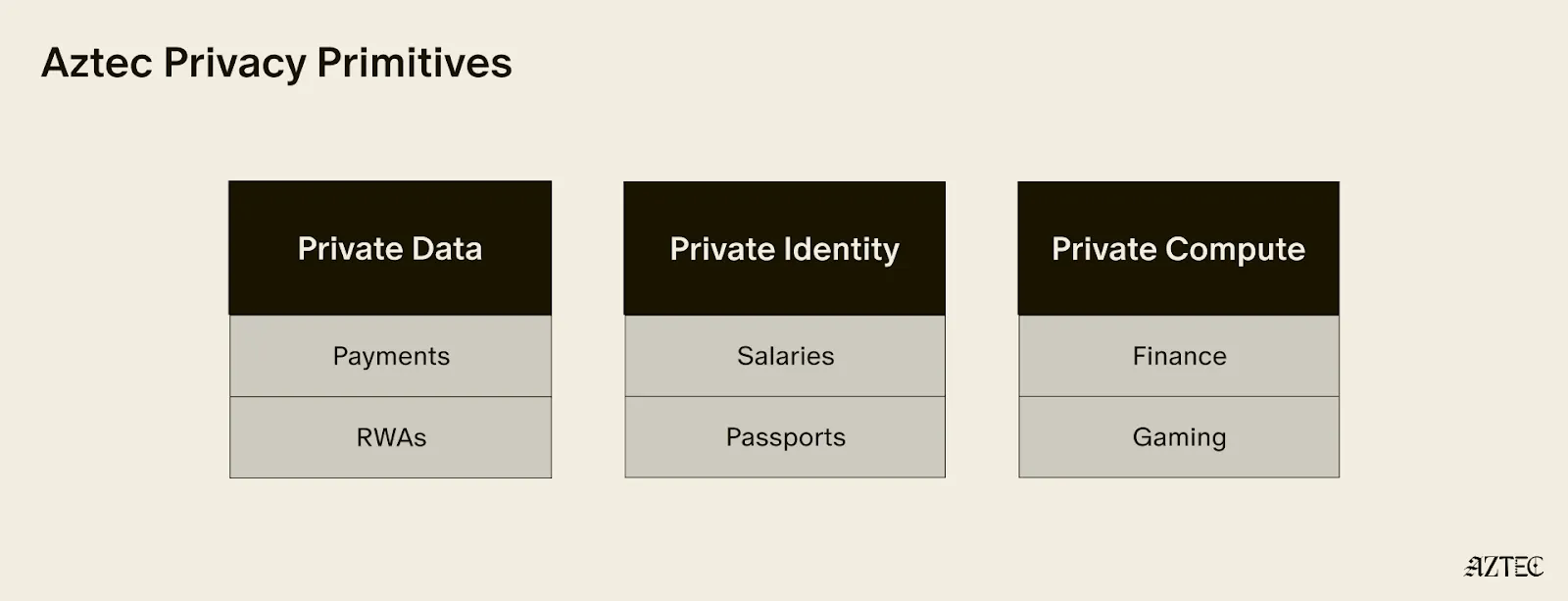
These privacy pillars, which can be used individually or combined, break down into three core layers:
Alpha is feature complete–meaning this is the only full-stack solution for adding privacy to your business or application. You build, and Aztec handles the cryptography under the hood.
It’s Composable. Private-preserving contracts are not isolated; they can talk to each other and seamlessly blend both private and public state across contracts. Privacy can be preserved across contract calls for full callstack privacy.
No backdoor access. Aztec is the only decentralized L2, and is launching as a fully decentralized rollup with a Layer 1 escape hatch.
It’s Compliant. Companies are missing out on the benefits of blockchains because transparent chains expose user data, while private networks protect it, but still offer fully customizable controls. Now they can build compliant apps that move value around the world instantly.
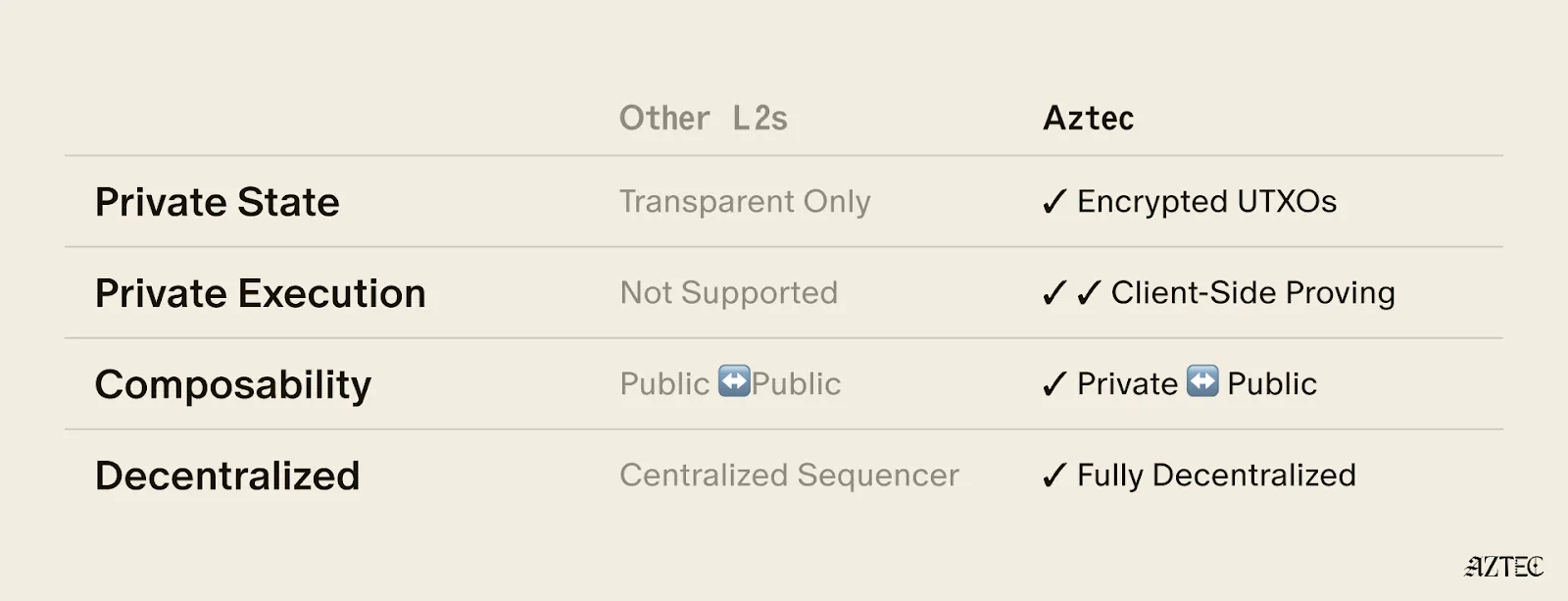
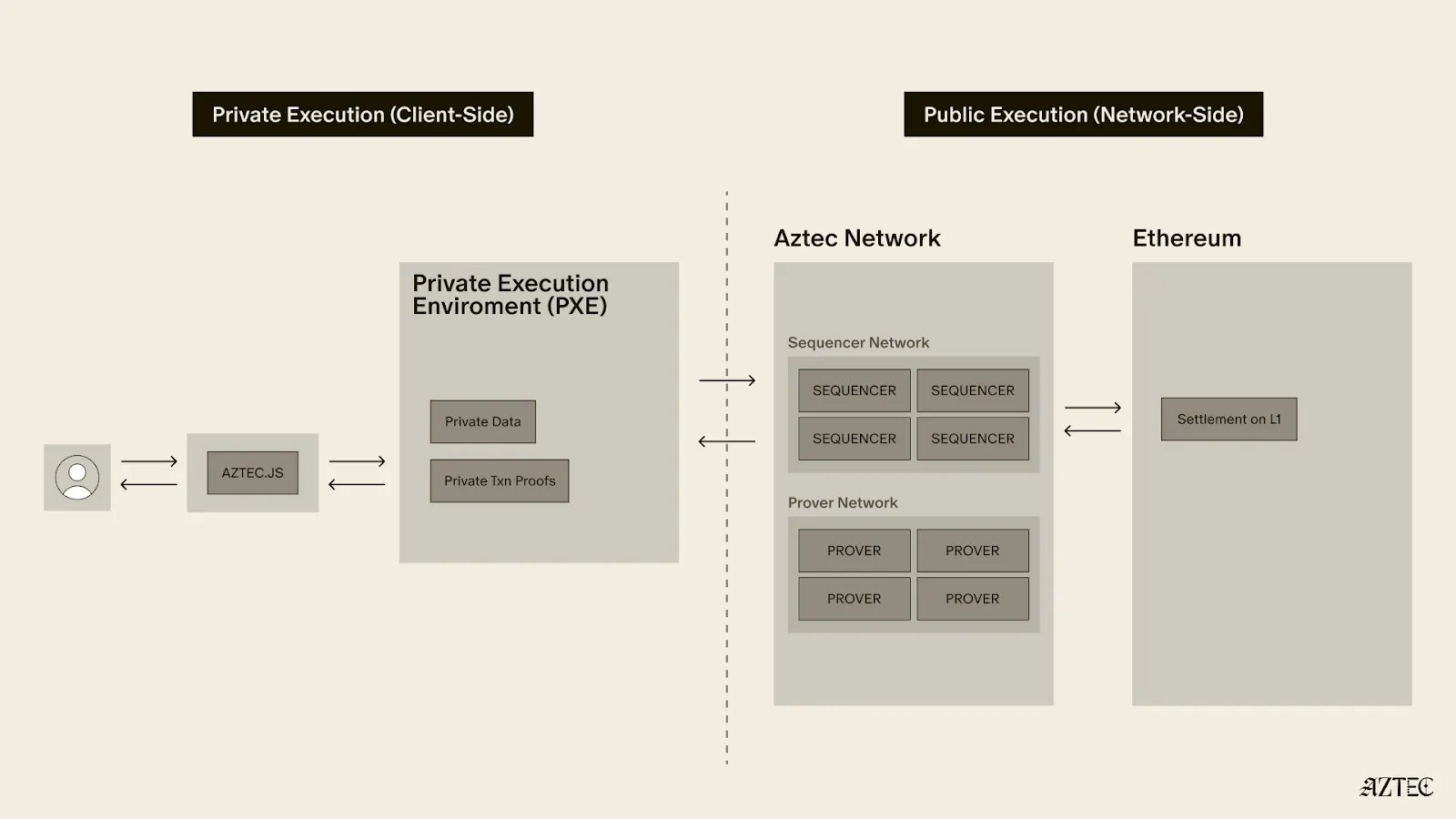
Developers can explore our privacy primitives across data, identity, and compute and start building with them using the documentation here. Note that this is an early version of the network with known vulnerabilities, see this post for details. While this is the first iteration of the network, there will be several upgrades that secure and harden the network on our path to Beta. If you’d like to learn more about how you can integrate privacy into your project, reach out here.
To hear directly from our Cofounders, join our live from Cannes Q&A on Tuesday, March 31st at 9:30 am ET. Follow us on X to get the latest updates from the Aztec Network.
The platform for unstoppable private apps is live. Major security upgrades, 2x speedup in private transactions, a growing ecosystem of private apps, and a bold new identity mark Aztec's next chapter.

How Aztec protects private data from quantum attacks today, and our plan for full post-quantum security.

Aztec is three layers. Noir is the language for writing programs that can be proved. The contract framework splits execution between your device and the network. The rollup underneath is run by thousands of independent sequencers. This is how they fit together.