Introducing Aztec Tierra (Alpha V6)
The platform for unstoppable private apps is live. Major security upgrades, 2x speedup in private transactions, a growing ecosystem of private apps, and a bold new identity mark Aztec's next chapter.

The first decentralized L2 on Ethereum reaches 75k block height with 30M $AZTEC distributed through block rewards.
In November 2025, the Aztec Ignition Chain went live as the first decentralized L2 on Ethereum. Since launch, more than 185 operators across 5 continents have joined the network, with 3,400+ sequencers now running. The Ignition Chain is the backbone of the Aztec Network; true end-to-end programmable privacy is only possible when the underlying network is decentralized and permissionless.
Until now, only participants from the $AZTEC token sale have been able to stake and earn block rewards ahead of Aztec's upcoming Token Generation Event (TGE), but that's about to change. Keep reading for an update on the state of the network and learn how you can spin up your own sequencer or start delegating your tokens to stake once TGE goes live.
The Ignition Chain launched to prove the stability of the consensus layer before the execution environment ships, which will enable privacy-preserving smart contracts. The network has remained healthy, crossing a block height of 75k blocks with zero downtime. That includes navigating Ethereum's major Fusaka upgrade in December 2025 and a governance upgrade to increase the queue speed for joining the sequencer set.
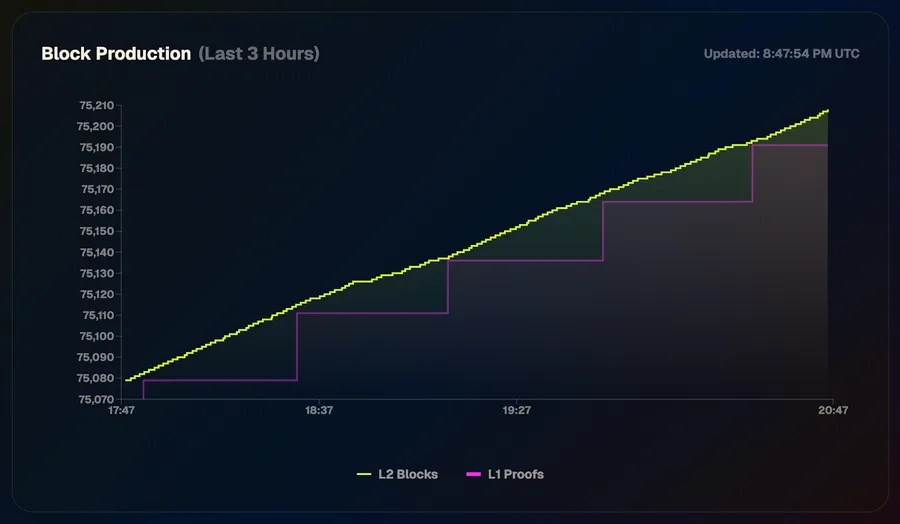
Over 30M $AZTEC tokens have been distributed to sequencers and provers to date. Block rewards go out every epoch (every 32 blocks), with 70% going to sequencers and 30% going to provers for generating block proofs.
If you don't want to run your own node, you can delegate your stake and share in block rewards through the staking dashboard. Note that fractional staking is not currently supported, so you'll need 200k $AZTEC tokens to stake.
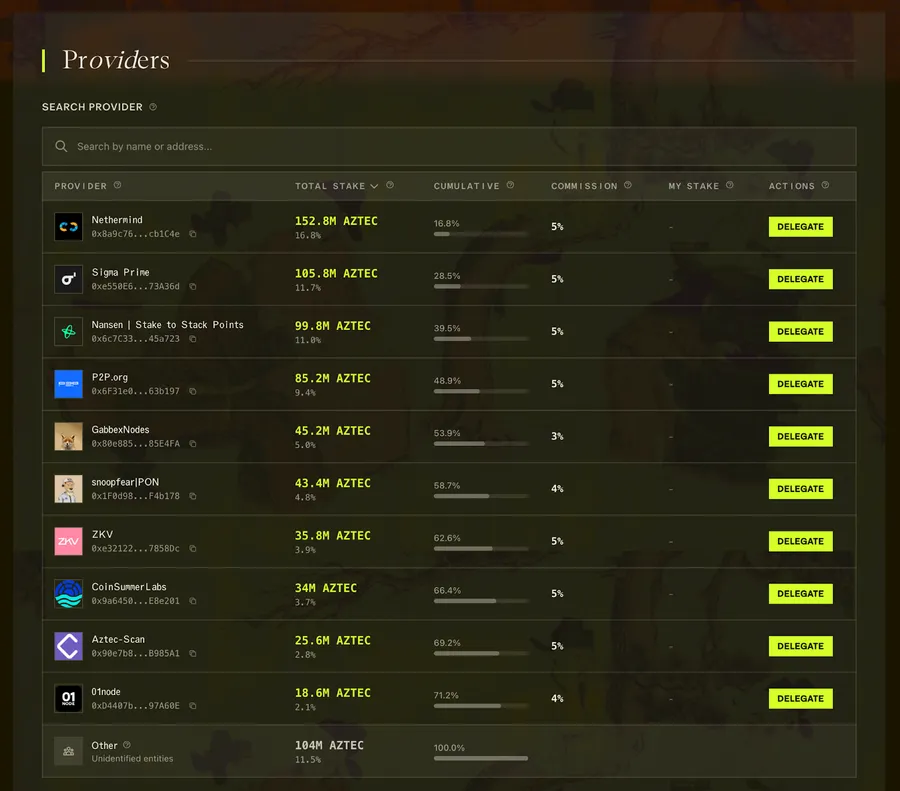
The Ignition Chain launched as a decentralized network from day one. The Aztec Labs and Aztec Foundation teams are not running any sequencers on the network or participating in governance. This is your network.
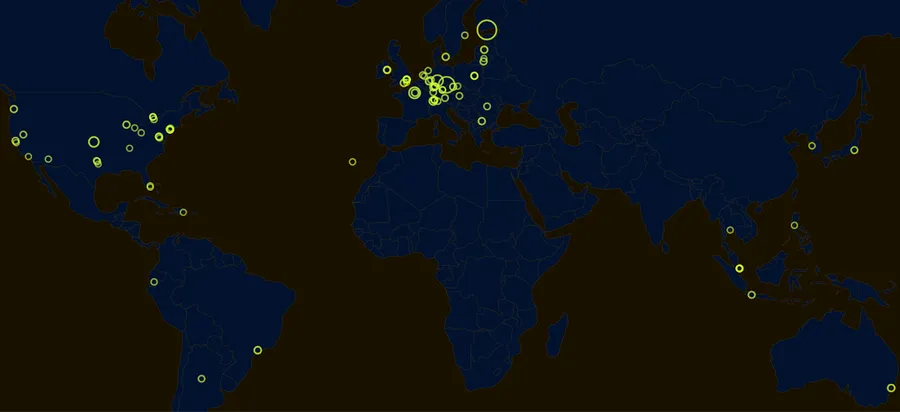
Anyone who purchased 200k+ tokens in the token sale can stake or delegate their tokens on the staking dashboard. Over 180 operators are now running sequencers, with more joining daily as they enter the sequencer set from the queue. And it's not just sequencers: 50+ provers have joined the permissionless, decentralized prover network to generate block proofs.
These operators span the globe, from solo stakers to data centers, from Australia to Portugal.
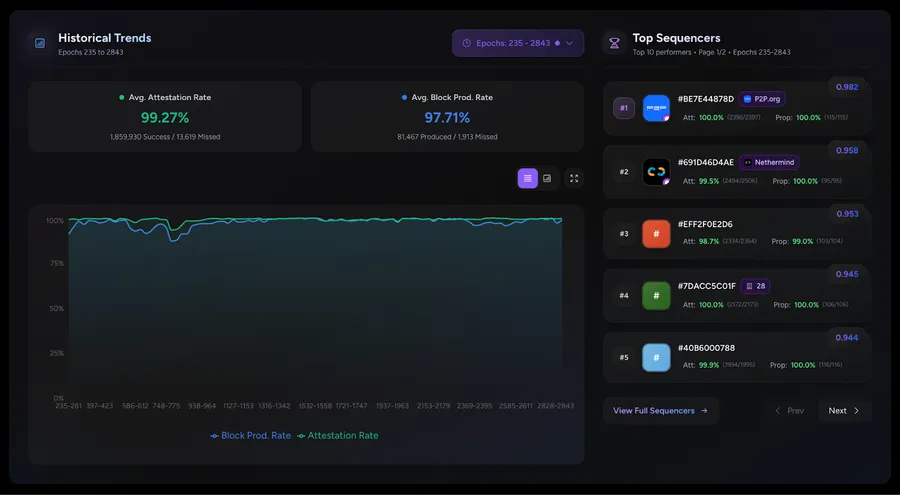
Participating sequencers have maintained a 99%+ attestation rate since network launch, demonstrating strong commitment and network health. Top performers include P2P.org, Nethermind, and ZKV. You can see all block activity and staker performance on the Dashtec dashboard.
On January 26th, 2026, the community passed a governance proposal for TGE. This makes tokens tradable and unlocks the AZTEC/ETH Uniswap pool as early as February 11, 2026. Once that happens, anyone with 200k $AZTEC tokens can run a sequencer or delegate their stake to participate in block rewards.
Here's what you need to run a validator node:
These are accessible specs for most solo stakers. If you've run an Ethereum validator before, you're already well-equipped.
To get started, head to the Aztec docs for step-by-step instructions on setting up your node. You can also join the Discord to connect with other operators, ask questions, and get support from the community. Whether you run your own hardware or delegate to an experienced operator, you're helping build the infrastructure for a privacy-preserving future.
Solo stakers are the beating heart of the Aztec Network. Welcome aboard.
The platform for unstoppable private apps is live. Major security upgrades, 2x speedup in private transactions, a growing ecosystem of private apps, and a bold new identity mark Aztec's next chapter.

How Aztec protects private data from quantum attacks today, and our plan for full post-quantum security.

Aztec is three layers. Noir is the language for writing programs that can be proved. The contract framework splits execution between your device and the network. The rollup underneath is run by thousands of independent sequencers. This is how they fit together.