The Aztec Network today activated Alpha V5, a major protocol upgrade passed by token-holder governance and executed onchain. Alpha V5 reduces private-transaction proving times by more than 2x compared to the previous version, lowers the cost of a fully private transaction by roughly 50%, resolves the critical issues found in V4, and sees the first wave of apps go live. Users can now send private transactions and earn yield on Aave simply by connecting their Ethereum wallets on Nyx, bridge from Ethereum to Aztec using Shield or TRAIN, privately collect NFTs on RavenHouse, or play Dark Forest Aztec, a hidden-information strategy game in a universe that lives entirely onchain.
"Alpha V5 continues Aztec's work at the frontier of client-side proving, with cryptographic breakthroughs that cut proving times by more than half this release," said Zac Williamson, Co-founder, Aztec Foundation. "We believe Aztec is now the fastest system in the world for proving a fully private transaction entirely on a user's own device, and every release moves the industry closer to private transactions at public transaction speeds."
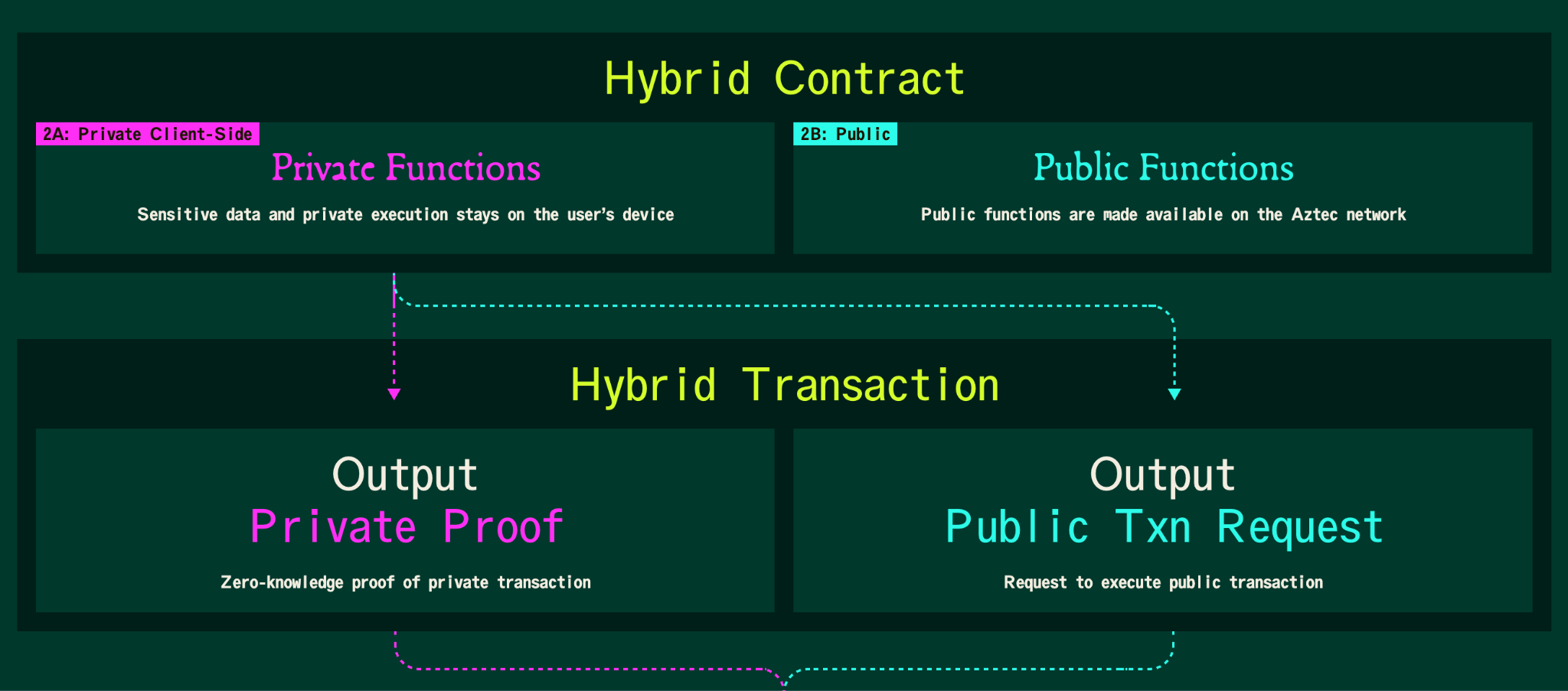
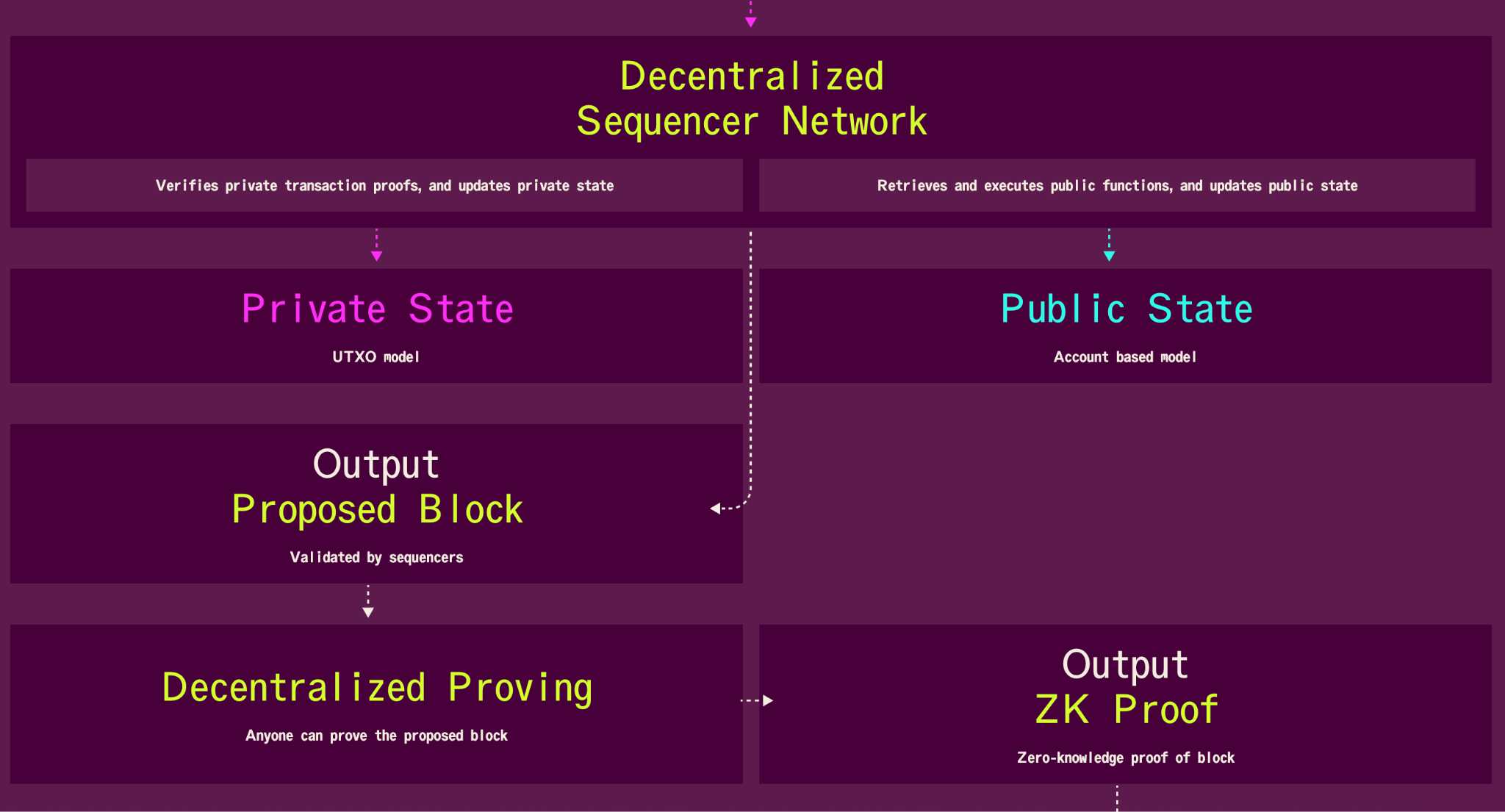
As the only decentralized privacy L2, Aztec is the credibly neutral privacy layer for Ethereum. Aztec allows anyone to write smart contracts that include both private and public aspects – every private transaction is proven on the user's own device, so no operator, sequencer, or intermediary can see the data. The Alpha V5 proving improvements come from cryptographic advances that make this client-side proving faster than any prior release. The network remains in alpha, but with V5 it is ready for teams to begin building and deploying applications.
Performance - 2.5 second fully private transactions
Making private transactions practical comes down to how quickly a proof can be generated on a user's own device, without offloading that work to a server that would learn what the user is doing. On Alpha V5, proving a private token transfer natively now takes approximately 2.5 seconds on a consumer laptop, down from 5.2 seconds on V4, and about 6.8 seconds in a browser, down from 12.5 seconds. Across every measured transaction flow, client-side proving times improved by approximately 2x compared with V4.

Alpha V5 lowers ECDSA signature-verification cost by approximately 2x, speeds up Poseidon2 hashing by approximately 3x, and reduces the protocol circuit gate count by approximately 50% (gate count is the number of individual operations a proving circuit must perform, and it is the main driver of how long a proof takes to generate). Each of these lowers the amount of work a device performs to prove a transaction, and the reduction in gate count in particular compounds across every proof the network generates.
Apps - send, receive, and earn privately on Ethereum
Alpha V5 launches the first wave of apps on a network where privacy is built into the protocol rather than managed by an operator. On other networks that claim privacy, transactions still pass through an operator or node that reads them in plaintext, or depend on a viewing key that a third party holds, so users rely on someone else to protect their data and to decide when it gets disclosed. On Aztec, every private transaction is proven on the user's own device, so the app, the sequencer, and any operator never need to see the underlying data. Nyx is one of these apps, allowing users to privately send transactions and privately earn yield on Aave.
"On Ethereum, everything you do is public. That's why we built Nyx: a private account governed by your Ethereum wallet", said Nikhil, Co-founder of Nyx. "Now you can send, receive and earn in private. Nyx was the first app live on the Aztec Alpha, and we're excited to expand participation to more users with the added stability of Alpha V5."
Other apps on Alpha V5 include Azguard and Nethermind (wallets), Shield, TRAIN, and RavenHouse (bridges), and the Aztecscan block explorers. Also launching is Dark Forest Aztec, a game where users explore a universe, control planets, manage planetary energy, expand territory, and launch attacks through strategic play with private state and hidden actions.

Lower costs, higher security
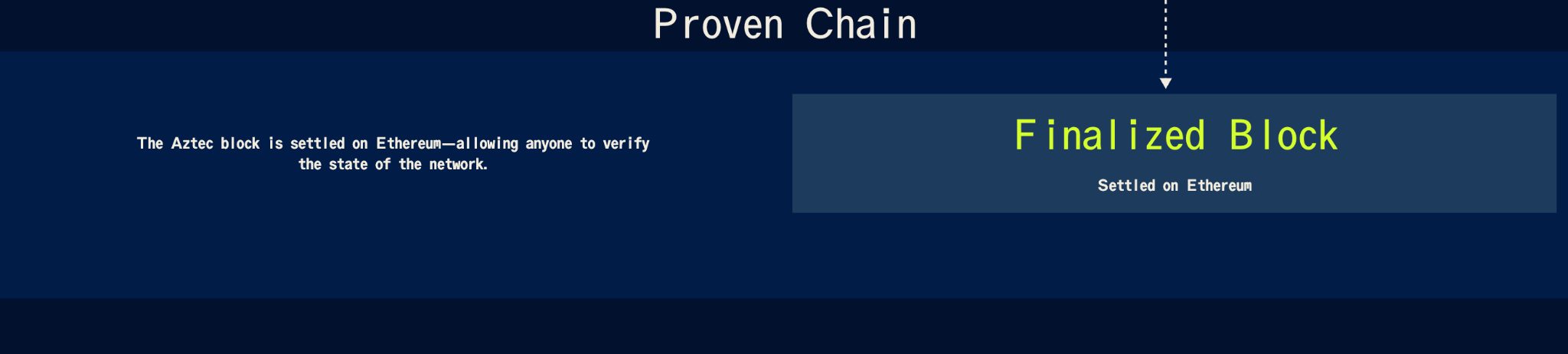
Transaction fees on Aztec come from two main sources: the cost of proving a transaction and the cost of verifying the rollup proof on Ethereum. Alpha V5 reduces both. It lowers the network's proving-cost parameter by 50%, and it reduces the L1 gas required to verify a rollup proof by approximately 40%. Because rollup proofs are verified on Ethereum and that cost is shared across all transactions in a batch, the L1 reduction lowers fees for every user, while the lower proving-cost parameter reduces the per-transaction proving fee directly. Together, these bring the average cost of a fully private token transfer to under a $0.05 transaction cost.
Alpha V5 also hardens the network on several fronts. It resolves critical vulnerabilities found in Alpha V4 along with additional bugs discovered since launch. Aztec's bug bounty program on Cantina also drew more than 234 security researchers to participate. The network remains in alpha, and further bugs may surface as usage grows, but each release has closed the issues found in the last and strengthened the protocol against new ones. With the critical V4 issues resolved and these safeguards in place, Alpha V5 is stable enough for teams to begin building and deploying applications.
Availability
Alpha V5 is live now, view the Alpha V5 landing page for a full list of features, performance updates, and live apps to explore.
About Aztec
Aztec is the only decentralized, privacy-first Layer 2 on Ethereum. Developers write private and public logic in the same smart contract, and private functions are executed and proven on the user's own device, so no operator sees the underlying data. The protocol is upgraded through onchain governance, and the network settles to Ethereum. For more information, visit aztec.network.