Aztec Network
10 Dec
## min read

Private DeFi with the Aztec Connect Bridge

The Aztec Connect Bridge's enables private and cost-effective DeFi transactions on Ethereum, a significant advancement in blockchain privacy.

Share
Written by
Jon Wu
Edited by
Up to 100x cheaper than Ethereum with privacy built in — now live on testnet!

Today we’re excited to announce the next step in Aztec’s vision for privacy and scaling on Ethereum: Aztec Connect.

Aztec Connect allows users to confidentially access world-class DeFi services on Ethereum with up to 100x cost savings, all while strengthening Aztec’s existing privacy guarantees.

In March, we launched zk.money, our private payments protocol. It demonstrates how Aztec’s privacy architecture can enable simple asset transfers, allowing users to privately send $DAI, $ETH, and $renBTC.

Aztec Connect is a giant leap ahead: users can now bridge private assets to mainnet for a DeFi interaction and return to Aztec in the same transaction. For the first time ever, it’s now possible to interact cheaply and privately with any Ethereum DeFi application.

And it’s live on testnet.

Connect is a privacy and scalability module for money markets, DEXes, liquid staking pools, derivatives, and everything else Ethereum builders dream of. It also interacts directly with Layer 1 liquidity and contracts, meaning no fragmentation or core contract redeployment.

Welcome to the new age of Ethereum, where transactions are affordable and private by default.

Aztec: Origins

Aztec was founded to solve financial privacy.

However, given limitations at the time in zero knowledge proving architecture, the first version of Aztec had trade-offs that restricted user privacy, even while preserving transaction confidentiality.

The road to Aztec Connect involved inventing the now industry-standard PLONK proving system, which not only added user privacy but offered significant performance improvements, accelerating Aztec 1’s speed and throughput.

These improvements led to the deployment of the world’s first private rollup, offering private payments with immeasurably better privacy and gas fees 25x cheaper than privacy mixers.

Since deploying on mainnet, Aztec has welcomed over 20,000 users who have made $38 million+ in deposits.

We are now ready to unveil Aztec Connect, the next phase in our journey.

Aztec Connect: Gateway to Private DeFi

Aztec Connect serves as a bridge to Ethereum, allowing users to bring privacy-shielded zk-assets on Aztec to public DeFi protocols on Ethereum.

As a result, users save 80–90% on gas fees with privacy thrown in for free.

Users deposit funds into Aztec’s Layer 1 rollup contract, and privacy-shielded notes are minted by the Aztec system, identified by their zk- prefixes (e.g. zkETH and zkDAI).

Previously, functionality and usability of zk-assets was limited to internal-to-Aztec private sends and private withdrawals to Ethereum L1 addresses.

Now, users can do any DeFi transaction supported by an Aztec Connect Bridge Contract — a 50 to 100-line interface allowing Aztec’s roll-up to interact with a given Layer 1 smart contract.

Here’s how it works in a pretty animation:

Once users decide on a DeFi transaction, Aztec batches transactions up with other transactions of the same type and passes them to an Aztec Bridge Contract.

The Bridge Contract then takes the aggregated funds and calls the relevant functions from a DeFi protocol, returning proceeds from the interaction to the rollup contract. Finally, Aztec updates its state tree and in the process gives users on the network their share of funds as shielded notes.

Aztec Connect acts as a proxy acting on behalf of users within Aztec who want to execute a DeFi transaction on Layer 1.

If you need further help anthropomorphizing the rollup, or need help imagining a proxy, I’ve got you! Here are a few famous ones:

1. Brooke Lampley from Sotheby’s — the eminently meme-able proxy bidder for ConstitutionDAO’s effort to buy the U.S. Constitution:

“Hi, uhm, there are 17,000 of us and we’d like to buy the Constitution?”

2. Tank, the operator from The Matrix:
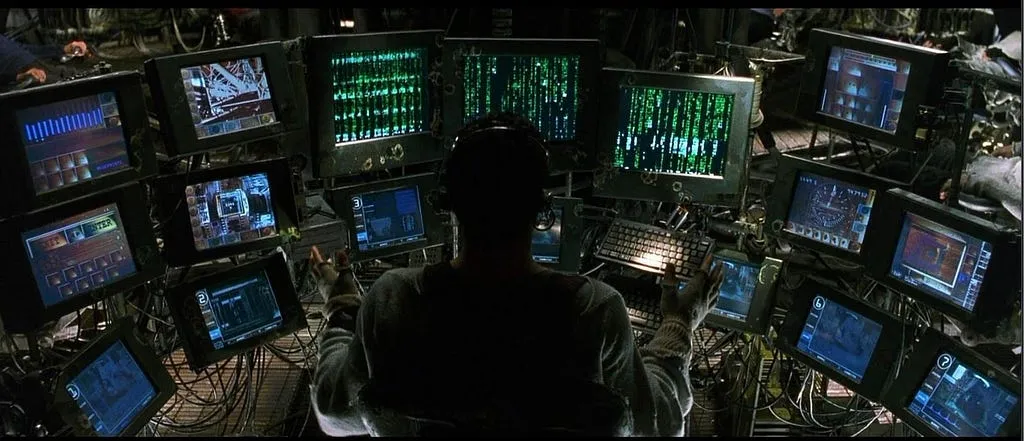
“We’re supposed to start with operation programs first. That’s major boring. Let’s do something…more fun.”

Brooke represented a community of 17,000 depositors looking to execute one transaction (“buy the constitution”) and outbid Ken Griffin, megawhale CEO of Citadel.

Tank represented a fictional community of real-world humans attempting to overthrow hyper intelligent computer agent overlords who enslaved humanity in a scheme to extract body heat as an energy source.

An Aztec Connect Bridge Contract represents a batch of Ethereum users who want a given DeFi transaction in a given rollup.

See the similarities?

These three entities have a lot in common:

  • They’re heroes who help the small guy fight powerful entrenched interests.
  • They bridge people from one reality to another.
  • They make sure the interests of the people they represent are faithfully communicated across domains.

Now of course, Aztec’s Bridge Contracts are completely private, deterministic and secured by zero-knowledge proofs! They can’t ever betray users intent.

A Simple Example: Connect to Swap

How does this translate to practical cost-savings? Let’s talk through a basic Uniswap swap, which costs ~130,000 gas ($55.64).¹

Because the Aztec rollup supports large batch sizes — up to 896 transactions at launch, courtesy of Flashbots (more on this in a later post) — the cost of validating Aztec zero-knowledge proofs is amortized across many users.

You can think of this as the cost of privacy. At current proof construction costs, the cost of privacy is just 1,875 gas per transaction.

Say 100 users want to execute the same swap on Uni. Splitting the cost of the Uniswap transaction and cost of posting data on Ethereum, they each pay 15,762 gas.

In total, the cost of a Uniswap transaction becomes just 17,637 gas, or $7.52, an 86% savings over L1. Swaps become 7.4x cheaper, with iron-clad privacy as a bonus.

Aztec Connect vastly expands Aztec Network’s capabilities at launch, adding whitelisted DeFi functionality with select partners. Any developer looking to integrate Aztec to an existing DeFi application can write an Aztec Connect Bridge Contract.

Soon thereafter, the Connect SDK will allow developers to integrate affordable private transactions directly into their front-ends, making Aztec accessible straight from the DeFi experiences you love.

Permissionless, programmable privacy on Ethereum.

The No-Brainer Case for Projects

Integrating with Aztec Connect is simple, straightforward, and secure. A basic 50–100 line Bridge Contract helps Layer 1 smart contracts interface with Aztec’s rollup.

Bridge Contracts translate batch transaction requests for DeFi interactions from the Aztec rollup into function calls that DeFi protocols understand.

Due to its simplicity and robustness, integrating with Aztec has significant benefits over other scalability solutions:

  • Full privacy for users.
  • No liquidity fragmentation — all liquidity stays on Layer 1.
  • 80–90% cost savings over Ethereum for simple transactions, and up to 99% (100x improvement) for complex transactions.
  • No redeployment of core contracts — just the 50–100 line bridge contract.

In March, we brought privacy to $ETH, $DAI, and $renBTC with zk.money.

Aztec Connect extends privacy to all of Ethereum.

Buidl The Future of Ethereum

Aztec connect is now live in Alpha on testnet and we are welcoming developers to check out the starter kit for building Bridge Contracts and contact us to whitelist contracts for testing here:

Aztec Grants Program: https://airtable.com/shrvglCZ24jaH73oe

Connect Starter: https://github.com/AztecProtocol/aztec-connect-starter.

Whether you’re a protocol developer or a weekend warrior interested in giving your favorite DeFi app 10x cost savings with privacy built-in, join us.

Help make privacy a no-brainer.
Join the Aztec Community

We’re always on the lookout for talented engineers and applied cryptographers. If joining our mission to bring scalable privacy to Ethereum excites you — check out our open roles.

And continue the conversation with us on Discord or Twitter.

  1. While basic swaps cost 110,000 gas, a typical Uniswap trade is multi-hop: that is, the Uniswap protocol optimizes trade routing for slippage, which means the trade routes through a couple liquidity pools to fulfill the order. Hence a more typical trade cost of ~130,000 gas.

Private DeFi with the Aztec Connect Bridge was originally published in Aztec on Medium, where people are continuing the conversation by highlighting and responding to this story.

Read more
Aztec Network
Aztec Network
30 Jan
xx min read

Aztec Ignition Chain Update

In November 2025, the Aztec Ignition Chain went live as the first decentralized L2 on Ethereum. Since launch, more than 185 operators across 5 continents have joined the network, with 3,400+ sequencers now running. The Ignition Chain is the backbone of the Aztec Network; true end-to-end programmable privacy is only possible when the underlying network is decentralized and permissionless. 

Until now, only participants from the $AZTEC token sale have been able to stake and earn block rewards ahead of Aztec's upcoming Token Generation Event (TGE), but that's about to change. Keep reading for an update on the state of the network and learn how you can spin up your own sequencer or start delegating your tokens to stake once TGE goes live.

Block Production 

The Ignition Chain launched to prove the stability of the consensus layer before the execution environment ships, which will enable privacy-preserving smart contracts. The network has remained healthy, crossing a block height of 75k blocks with zero downtime. That includes navigating Ethereum's major Fusaka upgrade in December 2025 and a governance upgrade to increase the queue speed for joining the sequencer set.

Source: AztecBlocks

Block Rewards

Over 30M $AZTEC tokens have been distributed to sequencers and provers to date. Block rewards go out every epoch (every 32 blocks), with 70% going to sequencers and 30% going to provers for generating block proofs.

If you don't want to run your own node, you can delegate your stake and share in block rewards through the staking dashboard. Note that fractional staking is not currently supported, so you'll need 200k $AZTEC tokens to stake.

Global Participation  

The Ignition Chain launched as a decentralized network from day one. The Aztec Labs and Aztec Foundation teams are not running any sequencers on the network or participating in governance. This is your network.

Anyone who purchased 200k+ tokens in the token sale can stake or delegate their tokens on the staking dashboard. Over 180 operators are now running sequencers, with more joining daily as they enter the sequencer set from the queue. And it's not just sequencers: 50+ provers have joined the permissionless, decentralized prover network to generate block proofs.

These operators span the globe, from solo stakers to data centers, from Australia to Portugal.

Source: Nethermind 

Node Performance

Participating sequencers have maintained a 99%+ attestation rate since network launch, demonstrating strong commitment and network health. Top performers include P2P.org, Nethermind, and ZKV. You can see all block activity and staker performance on the Dashtec dashboard. 

How to Join the Network 

On January 26th, 2026, the community passed a governance proposal for TGE. This makes tokens tradable and unlocks the AZTEC/ETH Uniswap pool as early as February 11, 2026. Once that happens, anyone with 200k $AZTEC tokens can run a sequencer or delegate their stake to participate in block rewards.

Here's what you need to run a validator node:

  • CPU: 8 cores
  • RAM: 16 GB
  • Storage: 1 TB NVMe SSD
  • Bandwidth: 25 Mbps

These are accessible specs for most solo stakers. If you've run an Ethereum validator before, you're already well-equipped.

To get started, head to the Aztec docs for step-by-step instructions on setting up your node. You can also join the Discord to connect with other operators, ask questions, and get support from the community. Whether you run your own hardware or delegate to an experienced operator, you're helping build the infrastructure for a privacy-preserving future.

Solo stakers are the beating heart of the Aztec Network. Welcome aboard.

Aztec Network
Aztec Network
22 Jan
xx min read

The $AZTEC TGE Vote: What You Need to Know

The TL:DR:

  • The $AZTEC token sale, conducted entirely onchain concluded on December 6, 2025, with ~50% of the capital committed coming from the community. 
  • Immediately following the sale, tokens could be withdrawn from the sale website into personal Token Vault smart contracts on the Ethereum mainnet.
  • The proposal for TGE (Token Generation Event) is now live, and sequencers can start signaling to bring the proposal to a vote to unlock these tokens and make them tradeable. 
  • Anyone who participated in the token sale can participate in the TGE vote. 

The $AZTEC token sale was the first of its kind, conducted entirely onchain with ~50% of the capital committed coming from the community. The sale was conducted completely onchain to ensure that you have control over your tokens from day one. As we approach the TGE vote, all token sale participants will be able to vote to unlock their tokens and make them tradable. 

What Is This Vote About?

Immediately following the $AZTEC token sale, tokens could be withdrawn from the sale website into your personal Token Vault smart contracts on the Ethereum mainnet. Right now, token holders are not able to transfer or trade these tokens. 

The TGE is a governance vote that decides when to unlock these tokens. If the vote passes, three things happen:

  1. Tokens purchased in the token sale become fully transferable 
  2. Trading goes live for the Uniswap v4 pool
  3. Block rewards become transferable for sequencers

This decision is entirely in the hands of $AZTEC token holders. The Aztec Labs and Aztec Foundation teams, and investors cannot participate in staking or governance for 12 months, which includes the TGE governance proposal. Team and investor tokens will also remain locked for 1 year and then slowly unlock over the next 2 years. 

The proposal for TGE is now live, and sequencers are already signaling to bring the proposal to a vote. Once enough sequencers have signaled, anyone who participated in the token sale will be able to connect their Token Vault contract to the governance dashboard to vote. Note, this will require you to stake/unstake and follow the regular 15-day process to withdraw tokens.

If the vote passes, TGE can go live as early as February 12, 2026, at 7am UTC. TGE can be executed by the first person to call the execute function to execute the proposal after the time above. 

How Do I Participate?

If you participated in the token sale, you don't have to do anything if you prefer not to vote. If the vote passes, your tokens will become available to trade at TGE. If you want to vote, the process happens in two phases:

Phase 1: Sequencer Signaling

Sequencers kick things off by signaling their support. Once 600 out of 1,000 sequencers signal, the proposal moves to a community vote.

Phase 2: Community Voting

After sequencers create the proposal, all Token Vault holders can vote using the voting governance dashboard. Please note that anyone who wants to vote must stake their tokens, locking their tokens for at least 15 days to ensure the proposal can be executed before the voter exits. Once signaling is complete, the timeline is as follows:

  • Days 1–3: Waiting period 
  • Days 4–10: Voting period (7 days to cast your vote)
  • Days 11–17: Execution delay
  • Days 18–24: Grace period to execute the proposal

Vote Requirements:

  • At least 100M tokens must participate in the vote. This is less than 10% of the tokens sold in the token sale.  
  • 66% of votes must be in favor for the vote to pass.

Frequently Asked Questions

Do I need to participate in the vote? No. If you don't vote, your tokens will become available for trading when TGE goes live. 

Can I vote if I have less than 200,000 tokens? Yes! Anyone who participated in the token sale can participate in the TGE vote. You'll need to connect your wallet to the governance dashboard to vote. 

Is there a withdrawal period for my tokens after I vote? Yes. If you participate in the vote, you will need to withdraw your tokens after voting. Voters can initiate a withdrawal of their tokens immediately after voting, but require a standard 15-day withdrawal period to ensure the vote is executed before voters can exit.

If I have over 200,000 tokens is additional action required to make my tokens tradable after TGE? Yes. If you purchased over 200,000 $AZTEC tokens, you will need to stake your tokens before they become tradable. 

What if the vote fails? A new proposal can be submitted. Your tokens remain locked until a successful vote is completed, or the fallback date of November 13, 2026, whichever happens first.

I'm a Genesis sequencer. Does this apply to me? Genesis sequencer tokens cannot be unlocked early. You must wait until November 13, 2026, to withdraw. However, you can still influence the vote by signaling, earn block rewards, and benefit from trading being enabled.

Where to Learn More

This overview covers the essentials, but the full technical proposal includes contract addresses, code details, and step-by-step instructions for sequencers and advanced users. 

Read the complete proposal on the Aztec Forum and join us for the Privacy Rabbit Hole on Discord happening this Thursday, January 22, 2026, at 15:00 UTC. 

Follow Aztec on X to stay up to date on the latest developments.

Aztec Network
Aztec Network
6 Dec
xx min read

$AZTEC TGE: Next Steps For Holders

The TL;DR: 

The $AZTEC token sale was conducted entirely onchain to maximize transparency and fair distribution. Next steps for holders are as follows:

  1. Step 1: Create your Token Vault on the sale website. Your Token Vault will keep your tokens secure on Ethereum, keep them non-transferable until TGE, allow you to stake/delegate/participate in governance, and then withdraw them to your wallet after TGE.
  1. Step 2: Staking and Earning Block Rewards. If you have more than 200,000 tokens, you can start staking today on the staking dashboard
  1. Step 3: Token sale participants can vote for TGE as early as February 11th, 2026, at which 100% of tokens from the sale become transferable, and a Uniswap V4 pool goes live. 

The $AZTEC token sale has come to a close– the sale was conducted entirely onchain, and the power is now in your hands. Over 16.7k people participated, with 19,476 ETH raised. A huge thank you to our community and everyone who participated– you all really showed up for privacy. 50% of the capital committed has come from the community of users, testnet operators and creators!

Now that you have your tokens, what’s next? This guide walks you through the next steps leading up to TGE, showing you how to withdraw, stake, and vote with your tokens.

Step 1: Creating a Token Vault 

The $AZTEC sale was conducted onchain to ensure that you have control over your own tokens from day 1 (even before tokens become transferable at TGE). 

The team has no control over your tokens. You will be self-custodying them in a smart contract known as the Token Vault on the Ethereum mainnet ahead of TGE. 

Your Token Vault contract will: 

  • Keep your tokens secure on the Ethereum mainnet.
  • Ensure tokens remain non-transferable until TGE.
  • Allows you to stake, delegate, and take part in governance.
  • After TGE, you can withdraw your tokens to your wallet.

To create and withdraw your tokens to your Token Vault, simply go to the sale website and click on ‘Create Token Vault.’ Any unused ETH from your bids will be returned to your wallet in the process of creating your Token Vault. 

Step 2: Staking and Earning Block Rewards 

If you have 200,000+ tokens, you are eligible to start staking and earning block rewards today. 

You can stake by connecting your Token Vault to the staking dashboard, just select a provider to delegate your stake. Alternatively, you can run your own sequencer node.

If your Token Vault holds 200,000+ tokens, you must stake in order to withdraw your tokens after TGE. If your Token Vault holds less than 200,000 tokens, you can withdraw without any additional steps at TGE

Fractional staking for anyone with less than 200,000 tokens is not currently supported, but multiple external projects are already working to offer this in the future. 

Step 3: TGE 

TGE is triggered by an onchain governance vote, which can happen as early as February 11th, 2026. 

At TGE, 100% of tokens from the token sale will be transferable. Only token sale participants and genesis sequencers can participate in the TGE vote, and only tokens purchased in the sale will become transferrable. 

How does the voting process work? 

Community members discuss potential votes on the governance forum. If the community agrees, sequencers signal to start a vote with their block proposals. Once enough sequencers agree, the vote goes onchain for eligible token holders. 

Voting lasts 7 days, requires participation of at least 100,000,000 $AZTEC tokens, and passes if 2/3 vote yes.

What happens when the vote passes? 

Following a successful yes vote, anyone can execute the proposal after a 7-day execution delay, triggering TGE. 

At TGE, the following tokens will be 100% unlocked and available for trading: 

  • All tokens in Token Vaults that belong to token sale participants.
  • Accumulated block rewards for anyone staking.
  • Uniswap V4 pool. This pool will have 273,000,000 $AZTEC tokens and a matching ETH amount at the final clearing price. 

Join us Thursday, December 11th at 3 pm UTC for the next Discord Town Hall–AMA style on next steps for token holders. Follow Aztec on X to stay up to date on the latest developments.

Aztec Network
Aztec Network
13 Nov
xx min read

The ticker is $AZTEC

We invented the math. We wrote the language. Proved the concept and now, we’re opening registration and bidding for the $AZTEC token today, starting at 3 pm CET. 

The community-first distribution offers a starting floor price based on a $350 million fully diluted valuation (FDV), representing an approximate 75% discount to the implied network valuation (based on the latest valuation from Aztec Labs’ equity financings). The auction also features per-user participation caps to give community members genuine, bid-clearing opportunities to participate daily through the entirety of the auction. 

How to Check Eligibility and Submit Your Bid 

The token auction portal is live at: sale.aztec.network

  • This is the only valid link to the $AZTEC token auction site. Be cautious of phishing scams. No one from the Aztec team will ever contact you directly for seed phrase or private keys. 
  • Visit the site to verify your eligibility and mint a soul-bound NFT that confirms your participation rights. 
  • We have incorporated zero-knowledge proofs into the sale smart contracts by using ZKPassport's Noir circuits to ensure compliant sanctions checks without risking the privacy of our users. 
  • Registration and bidding for early contributors start today, November 13th, at 3 PM CET, with early contributors receiving one day of exclusive access before bidding opens to the general public.
  • The public auction will run from December 2nd, 2025, to December 6th, 2025, at which point tokens can be withdrawn and staked.

Why Are We Doing This? 

We’ve taken the community access that made the 2017 ICO era great and made it even better. 

For the past several months, we've worked closely with Uniswap Labs as core contributors on the CCA protocol, a set of smart contracts that challenge traditional token distribution mechanisms to prioritize fair access, permissionless, on-chain access to community members and the general public pre-launch. This means that on day 1 of the unlock, 100% of the community's $AZTEC tokens will be unlocked.

This model is values-aligned with our Core team and addresses the current challenges in token distribution, where retail participants often face unfair disadvantages against whales and institutions that hold large amounts of money. 

Early contributors and long-standing community members, including genesis sequencers, OG Aztec Connect users, network operators, and community members, can start bidding today, ahead of the public auction, giving those who are whitelisted a head start and early advantage for competitive pricing. Community members can participate by visiting the token sale site to verify eligibility and mint a soul-bound NFT that confirms participation rights. 

To read more about Aztec’s fair-access token sale, visit the economic and technical whitepapers and the token regulatory report.

Discount Price Disclaimer: Any reference to a prior valuation or percentage discount is provided solely to inform potential purchasers of how the initial floor price for the token sale was calculated. Equity financing valuations were determined under specific circumstances that are not comparable to this offering. They do not represent, and should not be relied upon as, the current or future market value of the tokens, nor as an indication of potential returns. The price of tokens may fluctuate substantially, the token may lose its value in part or in full, and purchasers should make independent assessments without reliance on past valuations. No representation or warranty is made that any purchaser will achieve profits or recover the purchase price.

Information for Persons in the UK: This communication is directed only at persons outside the UK. Persons in the UK are not permitted to participate in the token sale and must not act upon this communication.

MiCA Disclaimer: Any crypto-asset marketing communications made from this account have not been reviewed or approved by any competent authority in any Member State of the European Union. Aztec Foundation as the offeror of the crypto-asset is solely responsible for the content of such crypto-asset marketing communications. The Aztec MiCA white paper has been published and is available here. The Aztec Foundation can be contacted at hello@aztec.foundation or +41 41 710 16 70. For more information about the Aztec Foundation, visit https://aztec.foundation.